
Diabetes and Obesity
About Pila Pharma as presented by the American Diabetes Association in 2021
Global Obesity is pandemic in nature with estimates of more than 1 billion people suffering from it in 2025. It is a serious risk-factor for developing type 2 and other co-morbidities resulting in “whole body dysfunction” and subsequent development of several diseases. The accumulated effect is a year-long reduction in quality of life for obese people with or without diabetes.
Obesity leads to an increased risk of developing cardiovascular disease that eventually results in premature death and shortening of life duration. Recent advances by “Big Pharma” in the development of effective anti-obesity drugs, has proven that pharmacological weight management is possible and leads to obvious quality-of-life and longevity benefits.
Even long-term, public health costs are expected to be reduced if the clinically negative effects of the obesity pandemic are limited. This has sparked a general interest in future potential oral treatments that can meet the accessibility criteria needed to stimulate growing demand, and several acquisitions have been done in the obesity segment recently.
Diabetes is a similar spanning pandemic with strong ties to obesity, and with a staggering estimated prevalence of more than 828 million people living with diabetes corresponding to approximately 8-10% of the global adult population. Among these, its estimated that more than approximately 90 % of all diabetics suffer from type-2 diabetes, whilst approximately less than 10% suffers from type-1 diabetes.
Despite recent therapeutic advances, large and growing unmet needs exist both from efficacy, safety, and accessibility standpoints.
In August 2026, PILA PHARMA AB received regulatory approval from the European Medicines Agency, to conduct PP-CT04, a two-part, randomised, double-blind, placebo-controlled, parallel-group, 12‑week trial investigating the safety, tolerability, pharmacokinetics and efficacy of XEN-D0501 in obese participants.
The trial is designed to explore a within-subject dose titration approach to reach anticipated therapeutic plasma concentrations of XEN-D0501 not previously investigated.
Dose escalation will be carried out individually for each participant, beginning at 4 mg BID and increasing stepwise up to a maximum of 16 mg BID. Each dose level will be administered for 1 week, resulting in a maximum dose escalation period of 4 weeks. Once the highest tolerable dose has been reached and confirmed to be tolerable, the participant will continue treatment at that dose for an 8-week maintenance period.
The trial is divided into two parts:
Part 1 will function as a pilot safety cohort with 8 participants randomised 3:1 to XEN-D0501 (6 participants) or placebo (2 participants).
Part 2 will comprise the remaining 38 participants randomised 1:1 to XEN-D0501 (19 participants) or placebo (19 participants).
Part 2 may start once all participants in Part 1 have been dosed for at least 5 weeks and once a favourable recommendation has been given by the internal safety review committee.
The overall design of both parts is the same, but Part 1 entails more intense safety monitoring.
Enrollment for part 1 of the trial is ongoing.

We have published some of our early data on the beneficial effect of TRPV1 inhibition on glucose regulation and the association to (neurogenic) inflammation.
Please, find it here
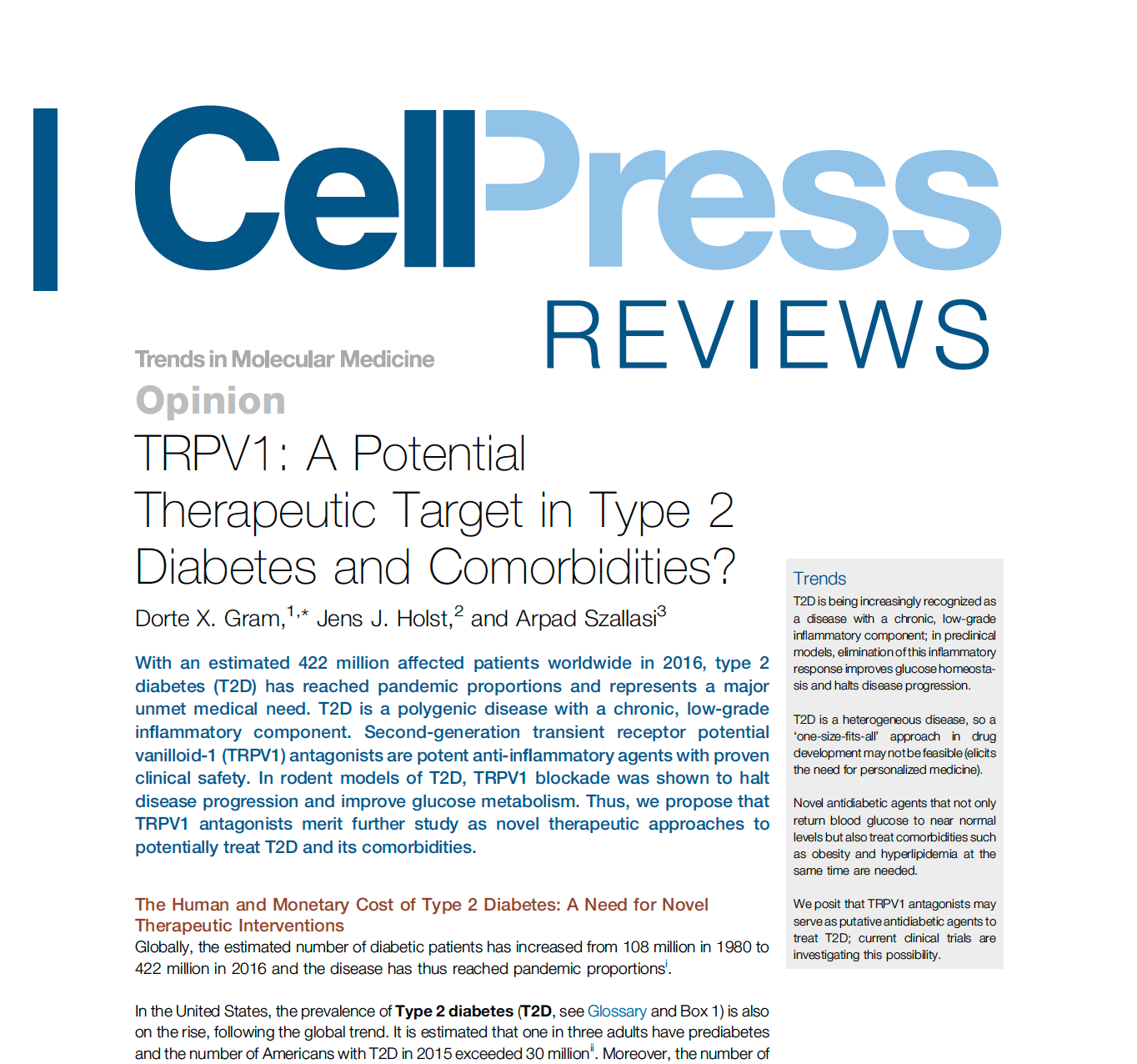
Our Opinion and Concept Paper on the role of TRPV1 in diabetes published in Trends in Molecular Medicine.
Read the paper here
(November 2017)
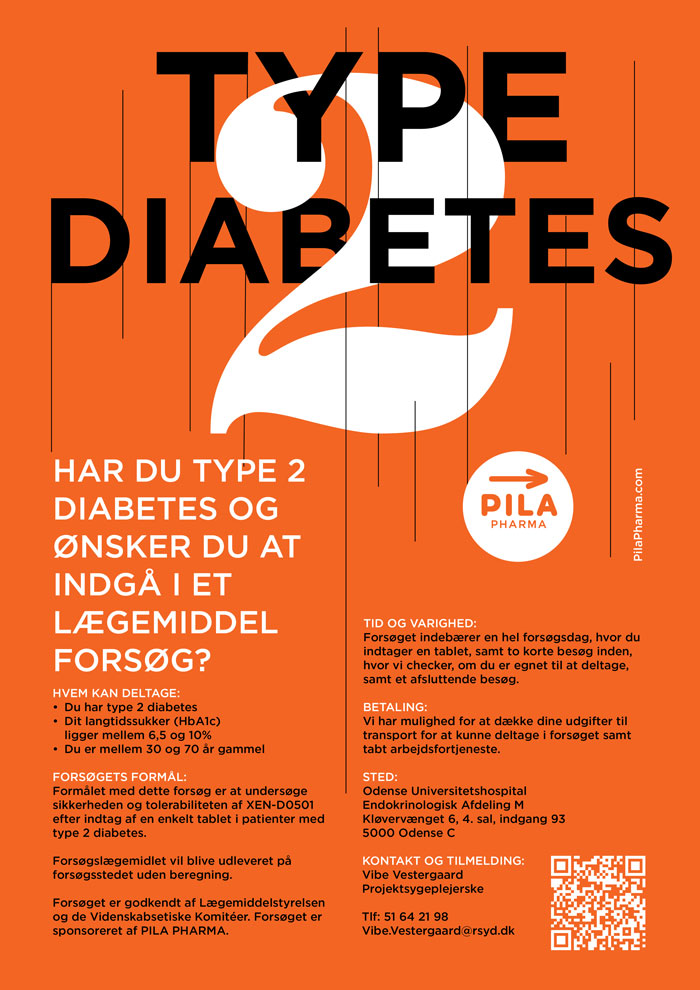
Recruitment poster from PILA PHARMAs first clinical trial PP-CT01 that was completed in November 2018
Pila Pharma CEO Dorte X. Gram marks the World Diabetes day with a visit to the Institute of Metabolic science at University of Cambridge, the facility of the upcoming clinical trial for diabetes and obesity.